Your Cart is Empty






After helping Toyota Tundra owners upgrade their rigs for over a decade, I can tell you that choosing the right Tundra accessoriessuch as a rear bumper is about much more than just protection. Your stock bumper might look adequate, but it’s primarily designed for aesthetics and crash compliance, not for the real-world demands of off-roading, overlanding, or even heavy work use.
I’ve seen too many Tundra owners discover their limitations the hard way. Whether it’s departure angle problems on steep descents, lack of recovery points when you’re stuck, or simply wanting to mount a spare tire and gear for overlanding adventures, the stock setup just doesn’t cut it for serious truck use.
Modern Toyota Tundra rear bumpers have evolved significantly beyond simple protection. Today’s designs integrate seamlessly with your truck’s advanced safety systems while adding functionality that transforms how you use your vehicle. Let me walk you through everything you need to know to choose the right rear bumper for your build.
The foundation of any quality Tundra rear bumper is its construction. Good bumpers use either 3/16” or 7-gauge steel for the main structure, with heavier mounting plates and brackets where loads concentrate. This isn't just for raw strength; it's for building a bumper that can handle recovery forces, support swing-out accessories, and provide a solid step without flexing or cracking. Choosing a well-constructed product is essential for ensuring long-term durability and reliable performance.
Steel construction remains the gold standard for serious applications. Steel bumpers typically use 3/16" plate with 1/4" mounting brackets, providing unmatched durability for recovery operations and heavy accessory mounting. The trade-off is weight, which you should expect to add 150-250 pounds to your truck's rear end.
Aluminum options are gaining popularity for their corrosion resistance and weight savings. Modern aluminum bumpers can be surprisingly strong, though they typically cost more and require more careful installation. Some manufacturers also offer hybrid designs that use steel for strength in critical areas while incorporating aluminum to save weight.
Pay attention to weld quality when comparing bumpers. Look for consistent, full-penetration welds at stress points, especially around recovery points and mounting brackets. Quality manufacturers will often show detailed photos of their welding work because they're proud of it. Avoid bumpers with small, inconsistent welds or obvious gaps in coverage.

The steel thickness matters too. While 3/16" is adequate for most applications, some heavy-duty designs use 1/4" steel in high-stress areas. This adds weight but provides extra margin for extreme use.
Trucks are getting more modern and equipped with more and more sensors every year, so you also have to make sure that the bumper you're planning to get can accommodate the sensors you have.
2022+ Tundra (3rd Generation): These trucks include advanced blind spot monitoring and parking sensors that must be accommodated.
2014-2021 Tundra (2nd Generation): This generation offers the widest selection of aftermarket bumpers. Many designs are available with or without sensor compatibility, depending on your truck's variant. The 2nd gen might be 2014-2021, but there are a lot of safety updates in between, so later variants might need more sensors.
2007-2013 Tundra: While fewer options exist for these trucks, quality bumpers are available from established manufacturers, and you might not need to worry about sensors for these year models.
Always verify exact fitment for your model year and trim level. CrewMax and Regular Cab variants may require different designs.
Bumpers are an integral part of vehicles nowadays. So if you're about to get a new bumper, it's all about getting the most out of it, not just protection, so consider these features for your bumper:
Modern rear bumpers should accommodate LED lighting for improved visibility and safety. Look for bumpers with integrated cutouts for standard light patterns like Baja Designs S2 or Rigid SR-M mounts. Quality designs include provisions for backup lights that replace or supplement the factory units.
Wiring integration is crucial. Look for harnesses that plug into your truck's existing wiring rather than requiring splicing. Some designs even relocate the trailer wiring plug to a more accessible location on the bumper itself.
Your rear bumper should work with your truck's existing hitch receiver while adding proper recovery points. Look for designs that maintain the factory tow rating and include D-ring mounts rated for your vehicle's weight. Recovery points should be designed to handle loads from multiple directions, not just straight pulls.
Some bumpers integrate recovery winch mounts, though rear winches are less common than front installations. If you're planning serious recovery work, ensure the bumper's structure can handle the loads involved.
Blind Spot Monitor (BSM) compatibility is essential for newer Tundras. Good bumpers include proper sensor mounting with covers that match the bumper's finish. Some designs may require professional calibration after installation.
Backup camera integration should be seamless. Yes, the Tundra's camera is on the tailgate, not on the bumper, but there are bumpers that also have tire carriers that extend up to the tailgate. So if you get one of those, make sure that it's designed to not compromise camera visibility or has a spot for the camera to be relocated.
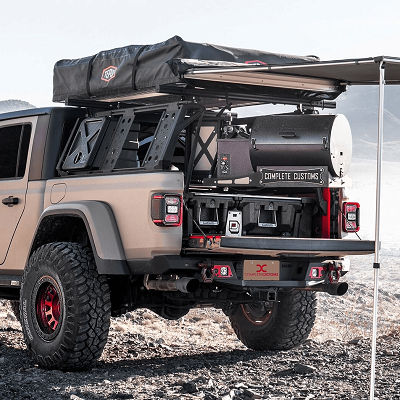
Swing-out designs offer the ultimate in functionality for overlanding and expedition use. These systems allow you to mount spare tires, fuel cans, recovery gear, and other accessories on articulating arms that swing away from the truck for easy bed access.
Dual swing designs provide maximum flexibility but add significant weight and cost. Single swing options offer a compromise between functionality and complexity. Consider your actual mounting needs rather than just choosing the most elaborate design available.

Now, let's go ahead and talk about some of the most reputable brands I've worked with and some of their best options.
C4 continues its no-compromise approach with its Overland Series rear bumper. Built from 3/16" P&O steel with 1/4" mounting plates and brackets, this bumper retains full blind spot monitoring functionality and parking sensors while adding serious protection and capability.
The design includes integrated 3/4" D-rings for recovery, works around the OE hitch receiver to maintain tow ratings, and comes with supplied reverse lights that replace the factory units. Backup light cutouts fit popular LED patterns from Baja Designs, Rigid, and others. The bumper ships bare steel and requires freight delivery, but the construction quality justifies the premium pricing.
One standout feature is that installation doesn't compromise any factory functionality – BSM sensors, parking sensors, and towing capacity all remain intact. Lastly, the 151-pound weight is reasonable for this level of protection and functionality.

Shop C4 Fabrication Overland Series Rear Bumper
CBI's Classic Series delivers its signature wrap-around protection with integrated recovery points and a built-in pocket step. Constructed from solid 7-gauge steel, this bumper improves departure angles while providing serious protection for off-road use.
The design retains factory blind-spot monitors and proximity sensors (though professional calibration may be required), and includes cutouts for additional flush-mount reverse lights. The wrap-around design provides protection that extends beyond just the rear panel, helping to shield the truck's corners and sides during tight maneuvering.
CBI's reputation for durability shines through in the construction details. The integrated step design is particularly useful for accessing truck beds and roof-mounted gear. Installation takes a few hours and benefits from having two people. All necessary hardware is included.

Shop CBI Offroad Classic Series Rear Bumper
Backwoods brings its signature hybrid aluminum and steel design to the Tundra platform, focusing on weight savings without sacrificing functionality. Their rear bumper delivers solid protection with additional lighting provisions, an integrated step, and improved clearance angles.
The hybrid construction uses steel where strength is critical, while incorporating aluminum to keep the weight reasonable. At $999, this bumper offers excellent value for owners who want quality protection without premium pricing. The design includes mounting points for additional lighting and recovery hardware while maintaining clean aesthetics.
Backwoods' Arkansas-built products emphasize practical functionality over flashy features. The straightforward design means easier installation and fewer potential failure points, making it an attractive option for DIY installers who want reliable protection.

Shop Backwoods Adventure Mods Rear Bumper
Expedition One's Dual Swing-Out design represents the pinnacle of rear bumper functionality. Built from 3/16" and 1/4" steel construction, this system weighs approximately 225 pounds but offers unmatched versatility for serious overlanding and expedition use.
The patent-pending locking latch system provides intuitive operation of the swing arms, which can be locked in place when opened for easy access to your truck bed. Universal mounting plates on each arm allow limitless configurations for spare tires, Hi-Lift jacks, fuel cans, and recovery gear.
The system works with blind spot monitors and parking sensors while accommodating tires up to 40" (though 37" is recommended). Quick access to arm bearings ensures easy maintenance, and the robust construction handles the repeated stress of swing-out operation. This is the ultimate choice for owners who need maximum functionality and don't mind the weight penalty.

Shop Expedition One Dual Swing-Out Rear Bumper
Quality Tundra rear bumpers range from around $1,000 for basic protection up to $3,000+ for full swing-out systems. Here's how to budget:
Don't forget additional costs like professional installation ($500-1,000), accessories for swing-out systems, finishing costs (powdercoating or painting), and potential freight shipping charges.
Rear bumper installation complexity varies significantly between designs. Basic bolt-on bumpers can often be installed in 2-4 hours with basic tools and a helper. Swing-out systems may require professional installation due to weight and complexity. While some bumpers even say no sensor calibration required, your truck might ask for it anyways so take that into consideration as well.
Always follow manufacturer instructions carefully, especially regarding sensor calibration and wiring connections. If your truck has advanced safety features, consider professional installation to ensure everything functions correctly.
Choosing the right Tundra rear bumper comes down to matching features to your actual needs and use case. Daily drivers benefit from designs that maintain all factory functionality while adding protection and recovery points. Serious overlanders justify swing-out systems that transform how they carry gear and access their truck.
Don't get caught up in features you'll never use, but don't shortchange yourself on essentials like sensor compatibility and proper construction. The right rear bumper should serve you well for years while enhancing both the capability and value of your Tundra.
Whether you choose basic protection or a full expedition-ready system, invest in quality construction from a reputable manufacturer. Your rear bumper is a long-term investment that should enhance your adventures rather than create new problems.
Will a rear bumper affect my truck's sensors and cameras?
Quality bumpers are designed to work with factory sensors and cameras. However, blind spot monitors may require professional calibration after installation, and some sensors might need relocated mounting points.
How much weight does a rear bumper add?
Basic steel bumpers add 80-150 pounds, while full swing-out systems can add 200-250 pounds. This affects rear suspension and overall balance, so consider suspension upgrades if you're adding significant weight.
Can I install a rear bumper myself?
Basic bumpers can often be DIY projects with proper tools and assistance. Swing-out systems typically require professional installation due to weight and complexity. Always check warranty requirements before choosing DIY installation.
Do rear bumpers affect towing capacity?
Properly designed bumpers work around the factory hitch receiver and don't affect tow ratings. However, added weight reduces available payload capacity, which could impact total trailer weight calculations.
What's the difference between a swing-out and a traditional bumper?
Traditional bumpers provide protection and basic functionality. Swing-out designs add articulating arms that carry spare tires and gear, providing much greater utility for overlanding but at significant cost and weight penalties.
Comments will be approved before showing up.