Your Cart is Empty






After spending the better part of a decade outfitting Toyota Tundra trucks for everything from daily commuting to week-long overland expeditions, I've learned one thing: your factory suspension is holding you back. Whether you're dealing with nose-dive under braking, rear squat when towing your boat, or getting beaten up on every forest service road, Toyota's stock setup just isn't cutting it for serious truck use.
Let's face it, Toyota built the Toyota Tundra to be a jack-of-all-trades, and yes, it's fairly capable, but that means it's not optimized for any specific use case. The good news? With the right suspension upgrades, including properly matched suspension lift kits and performance components, you can transform your truck into exactly the vehicle you need it to be. With that said, here's everything you need to know about upgrading your Tundra's suspension system.
Your Tundra's factory suspension represents Toyota's compromise between cost, comfort, capability, and manufacturing constraints. It's designed to work "well enough" for the broadest possible audience, which means it doesn't excel at anything specific.
Here's what I see consistently with stock Tundra suspension:
Ride Quality Issues: The factory setup feels harsh over small bumps but wallows through corners. Toyota tuned it for maximum comfort at highway speeds, but daily driving around town exposes its limitations quickly.
Load Handling Problems: Even the TRD Pro struggles with proper load management. Add a few hundred pounds of gear or hook up a trailer, and you'll experience significant rear squat that affects braking, steering, and overall safety.
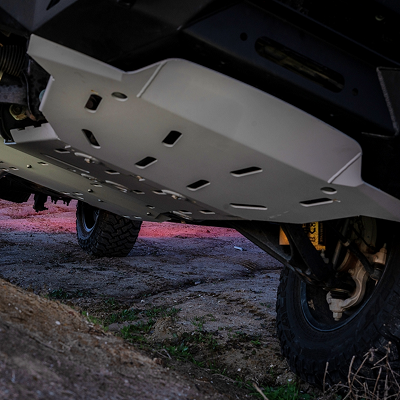
Off-Road Limitations: Factory ground clearance is adequate, but the suspension travel and damping are nowhere near what you need for serious off-road work. Additionally, the stock sway bar setup and upper control arms limit articulation and travel. Hit a series of whoops or technical rock sections, and you'll quickly find the limits of the factory position.
Towing Deficiencies: While the Tundra can tow impressive weights on paper, the suspension doesn't provide the control needed for confident towing, especially in crosswinds or emergency maneuvers.
Pro Tip:
“Before investing in a suspension upgrade, we highly recommend weighing your Tundra with all your typical gear and accessories.
This will give you a precise understanding of your vehicle's actual weight, allowing you to choose the right suspension components for optimal performance and safety."
Understanding your options is crucial for making the right choice. Each upgrade category addresses different issues and comes with distinct trade-offs.
Replacing just your shocks and struts is often the most cost-effective way to dramatically improve your Tundra's ride quality and handling. This is where I typically start with customers who want better performance without major modifications.
Quality aftermarket shocks use superior valving, better seals, and more sophisticated damping curves compared to factory units. You'll immediately notice improved control over rough surfaces, reduced body roll in corners, and better overall composure.

Toyota Tundra trucks come with a factory rake where the front sits lower than the rear. This looks awkward and limits your approach angle for off-road driving. Leveling kits address this by raising the front 2-3 inches to match the rear height.
Full suspension lift kits go further, raising both front and rear to provide additional ground clearance and allow for larger tires. However, suspension lift modifications introduce complexity around CV angles, steering geometry, and upper control arms that must be properly addressed. Quality lift kits from manufacturers like Icon Vehicle Dynamics include corrected upper control arms to maintain proper suspension geometry.

Coilovers combine the shock and spring into a single adjustable unit. This gives you the ability to fine-tune ride height, spring rate, and damping to match your specific needs. Quality coilovers are the foundation of any serious off-road or performance suspension setup.
The adjustment capability is key, you can dial in the perfect setup for your weight distribution, driving style, and intended use. Most coilovers also offer easier installation compared to separate spring and shock systems.
Leaf spring upgrades address load carrying capacity and ride quality. Quality rear shocks paired with upgraded leaf springs provide the foundation for proper load management. Add-a-leaf kits are the budget option, inserting additional spring leaves to increase load capacity. Full leaf spring replacements allow for more sophisticated tuning and better materials.
Progressive rate springs work particularly well for Toyota Tundra applications that see varied use; they're compliant when unloaded but firm up under load to maintain proper ride height and control. When combined with performance rear shocks, this setup handles everything from empty daily driving to fully loaded camping trips.
Important note: Only Tundras before 2022 come with leaf springs.
If your Tundra primarily sees street duty with occasional light off-road use, comfort and handling should be your priorities. These upgrades will transform your daily driving experience without sacrificing practicality.
For street-focused applications, I consistently recommend Bilstein 5100 series or Fox 2.0 performance shocks. These units provide significantly better damping control than factory shocks while maintaining reasonable comfort levels for daily truck use.
The key is proper valving for your specific Toyota Tundra application. Both Bilstein and Fox offer Tundra-specific valving that accounts for the truck's weight distribution and suspension geometry. You'll get better control over rough pavement, reduced body roll, and improved stability when towing or carrying loads. Many customers also upgrade their air filters and cabin filters during suspension work to ensure optimal performance across all systems.
Installation is straightforward on most Tundras, making this an excellent weekend project for DIY enthusiasts. Expect to spend $600-$1,200 for a complete set, depending on configuration.
A quality leveling kit eliminates the factory rake while maintaining ride quality on your Toyota Tundra. I prefer adjustable spacer-style leveling kits that allow fine-tuning of the front ride height without affecting other suspension components.
Pro Comp and Rough Country both offer excellent Toyota Tundra leveling solutions. Icon Vehicle Dynamics also produces premium leveling kits with superior materials and engineering. The adjustability is crucial, you can dial in the exact height to match your rear, accounting for any weight you typically carry up front.
Budget around $200-$400 for a quality leveling kit. Installation typically takes 2-3 hours and doesn't require specialized tools or alignment changes on most applications.
For the ultimate in on-road comfort and versatility, air suspension systems like those from Air Lift provide variable ride height and load compensation. These systems excel for customers who tow regularly or need to adjust ride height for different situations. Many installations also include upgraded sway bar links to accommodate the increased travel range.
The complexity and cost are significantly higher, expect $2,000-$4,000 installed, but the versatility is unmatched. You can dial in the perfect ride height for any load condition and adjust damping on the fly. When you submit a service ticket for air suspension installation, factor in additional time for proper system calibration and testing.

Serious off-road use demands components designed for abuse. These upgrades prioritize capability and durability over comfort, though modern systems minimize the trade-offs.
For off-road applications, remote reservoir shocks and coilovers are game-changers. The remote reservoir provides additional oil capacity and heat dissipation, crucial for repeated hard use.
Based on our extensive experience outfitting Tundras for serious off-road work, the King 2.5 Remote Reservoir Coilovers represent the gold standard for 2022+ Tundras. The 2.5-inch diameter provides excellent oil capacity, while King's race-proven valving delivers exceptional control over rough terrain.
For customers wanting a complete system, the King 2.5 Remote Reservoir Coilovers and Rear Shocks package provides matched front and rear damping. The rear shocks use the same 2.5-inch remote reservoir design for consistent performance front to rear.

King's bypass technology allows different damping rates throughout the stroke, providing plush initial travel for small bumps while ramping up control for bigger hits. This is particularly important for Tundra applications where you need comfort for daily driving but serious control for off-road abuse.
A proper suspension lift kit provides the ground clearance needed for technical terrain while maintaining suspension geometry on your Toyota Tundra. I typically recommend 2-4 inches for most off-road applications, enough clearance for larger tires and obstacles without introducing significant complexity.
Quality suspension lift kits address more than just ride height. Icon Vehicle Dynamics lift kits include corrected upper control arms, proper spring rates, and geometry corrections to maintain factory-like handling characteristics. These comprehensive kits also often include upgraded sway bar links and hardware to accommodate the increased suspension travel. Cheap suspension lift options that only include spacers often create more problems than they solve.
For extreme off-road use (think high-speed desert running or serious rock crawling), long travel suspension kits provide maximum capability. These systems replace major suspension components to allow 12+ inches of travel front and rear.
Long travel builds require significant modification and investment, typically $8,000-$15,000 for a complete system. However, the capability increase is dramatic. You can maintain control at speeds that would destroy a stock suspension and tackle obstacles impossible with factory travel limits.

Before diving into specific products, consider these critical factors that will determine the best setup for your needs.
Intended Use: Be honest about how you actually use your truck. A setup optimized for rock crawling will be miserable for daily commuting, and vice versa. Most customers benefit from a compromise setup that handles their primary use well while remaining livable for secondary applications.
Budget Reality: Quality suspension components aren't cheap, and installation costs add up quickly. Budget for the complete system, including any supporting modifications like bumpers, skid plates, or wheels that may be necessary.
Installation Complexity: Some upgrades are straightforward bolt-on procedures, while others require cutting, welding, and specialized tools. Be realistic about your capabilities or factor professional installation into your budget.
Supporting Modifications: Suspension changes often require additional upgrades. Suspension lift kits may need longer brake lines, CV axles, upper control arms, or steering components. Additionally, increased ride height can affect airflow patterns, sometimes requiring relocated air intake filters or modified air filter housings. Some customers also upgrade their fuel filters and transmission filters during major suspension overhauls to ensure all systems are optimized. Factor these into your planning and budget.
Warranty Considerations: Understand how modifications affect your factory warranty. Some dealers are modification-friendly, while others void warranties aggressively. Document everything and work with reputable shops.
After outfitting hundreds of Tundras, I've learned that the best setup depends more on your specific needs than your budget. Here's my systematic approach to choosing the right components:
Start with your primary use case. If you daily drive your Tundra but occasionally hit fire roads on weekends, prioritize comfort with moderate capability upgrades. If you're building a dedicated off-road rig, focus on capability even if it compromises street manners.
Consider your local terrain. Rocky technical trails demand different suspension characteristics than high-speed desert running or muddy forest roads. Match your damping and spring rates to the conditions you'll encounter most.
Plan for growth. Most customers add accessories over time, roof racks, bumpers, winches, armor. Choose suspension components that can handle additional weight without requiring replacement.
Don't mix random components. Suspension systems work as integrated packages. Mixing a budget suspension lift with premium shocks, combining upper control arms from different manufacturers, or installing mismatched sway bar components often yields poor results. Stick with complete systems from reputable manufacturers like Icon Vehicle Dynamics or Fox Racing.
Factor in tire upgrades. Larger, heavier tires significantly impact suspension loading and performance. If you're planning tire upgrades, choose suspension components and rear shocks that account for the additional unsprung weight. This is particularly important when selecting proper spring rates and damping curves.
Understanding the technical aspects helps you make informed decisions and avoid costly mistakes.
Spring Rates: Measured in pounds per inch, spring rates determine how much force is required to compress the spring. Higher rates support more weight but provide a firmer ride. Most aftermarket springs use progressive rates that start soft for comfort but firm up under load.
Damping Adjustment: Quality shocks and coilovers offer compression and rebound adjustment. Compression damping controls how fast the suspension compresses over bumps, while rebound damping controls how quickly it extends. Proper tuning of both is crucial for optimal performance.
Materials Matter: DOM (Drawn Over Mandrel) tubing is stronger than HREW (Hot Rolled Electric Welded) for the same weight. Aluminum components save weight but may not have the durability of steel for extreme use. Consider your priorities and intended use when evaluating materials.
Installation Complexity: Simple shock replacements require basic tools and can be completed in a few hours. Coilover installations may require spring compressors and alignment checks. Complete suspension overhauls often need specialized equipment and professional installation.
Alignment Requirements: Most suspension modifications require professional alignment to ensure proper tire wear and handling. Factor this $100-$200 service into your budget and timeline.
The "best" Tundra suspension upgrade depends entirely on your specific needs, but here are my recommendations based on common use cases:
For improved daily driving with occasional off-road use: Start with quality shocks like Bilstein 5100s and add a leveling kit. This combination addresses the most common complaints while maintaining comfort and reliability. Budget $800-$1,500 total.
For serious off-road capability with acceptable street manners: The King 2.5 Remote Reservoir system represents the sweet spot of capability and refinement. The complete coilover and rear shock package provides race-proven performance that's still civilized for daily use. Expect to invest $4,000-$6,000 for the complete system.
For maximum capability regardless of comfort: Long travel systems from manufacturers like King or Fox Racing provide ultimate off-road performance. These builds require significant modification and investment but deliver uncompromising capability.
For towing and heavy loads: Air suspension systems provide the versatility to adjust for varying loads while maintaining optimal ride height and control. The complexity is higher, but the functionality is unmatched for diverse use cases.
Remember, suspension upgrades are rarely a one-time purchase. Most customers evolve their setups over time as their needs change and their experience grows. Start with quality components that provide a foundation for future upgrades, and build your system incrementally.
The key is matching your suspension to your actual use, not your aspirations. A well-chosen compromise setup that handles your primary use case excellently will serve you better than an extreme setup that makes daily driving miserable.
Ready to transform your Tundra's suspension? Contact our team at Truck Brigade for personalized recommendations based on your specific needs and driving conditions. We've been outfitting adventure vehicles for over a decade, and we're here to help you build the perfect setup for your adventures.
Comments will be approved before showing up.