Your Cart is Empty



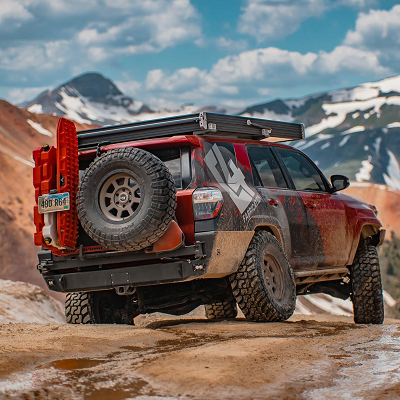




Looking to transform your Toyota 4Runner from factory stock to trail-ready perfection? You’ve come to the right place. Say goodbye to limitations and hello to a 4Runner that truly matches your adventurous lifestyle and practical needs. This guide explores the essential 4Runner accessories that will dramatically improve off-road capability, everyday convenience, and head-turning style!

The Toyota 4Runner stands as one of the last true body-on-frame SUVs in a market flooded with crossovers. This legendary vehicle has earned its reputation through decades of proven reliability and impressive off-road capabilities straight from the factory.
From my personal experience with multiple generations of 4Runners, these vehicles deliver exceptional performance in stock form. But like any good platform, they offer tremendous potential for enhancement to match your specific needs and adventures. These enhancements not only boost performance but also significantly improve the driving experience, making every journey more enjoyable.
While newer 4Runner models come equipped with improved technology and capability, every generation benefits from thoughtful modifications. Whether you’re driving a 3rd gen classic or the latest 6th gen model, the accessories I’m about to share can transform your vehicle’s performance, functionality, and style.
Your 4Runner’s exterior is both its armor against the elements and its statement to the world. The following accessories not only enhance your vehicle’s appearance but also expand its capabilities for adventure, particularly improving the front end aesthetics and functionality.
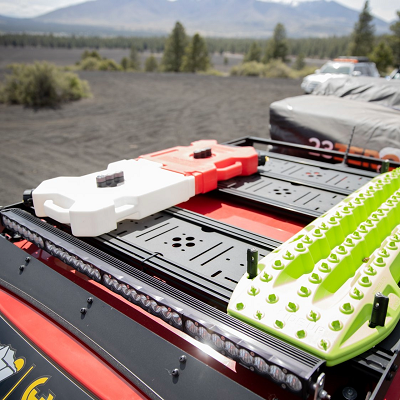
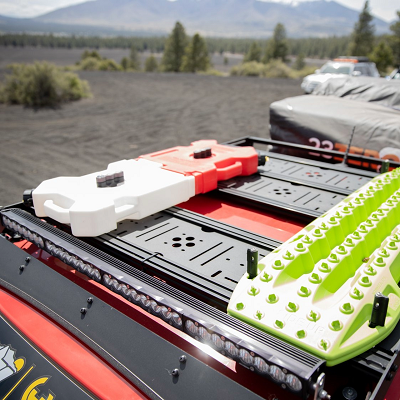
A quality roof rack significantly improves the limited cargo space of your 4Runner. Got tons of storage boxes? Roof tents? Do you want an easy way to mount a light bar? Or perhaps window panels? All of those things I've mentioned can't exist on your rig without roof racks!
Quality roof racks for the 4Runner offer an easy install, creating a stable platform for carrying everything from recovery gear to camping equipment. But if you're considering a roof top tent, having a strong, properly rated rack is absolutely essential so prepare to invest more in a better roof rack.
Companies like Prinsu and Sherpa offer excellent 4Runner-specific options with varying load capacities. I’ve found that aluminum racks provide the best balance of strength and weight, preventing excessive strain on your suspension while still handling heavy loads.
Another consideration is your desired accessories – many modern racks feature T-slot systems that allow for modular attachments including light mounts, awning brackets, gear tie downs, and all those things that I mentioned before. Just make sure that the roof rack you get will be able to work with the accessories you're planning to get.

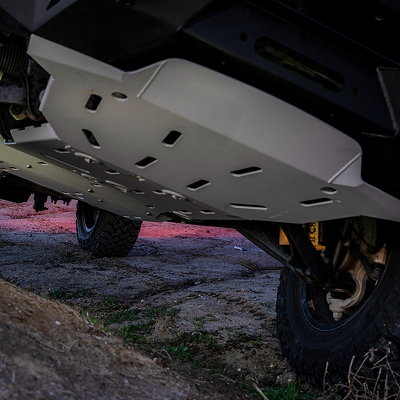
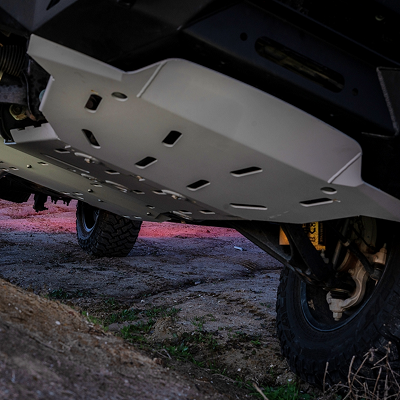
The 4Runner’s underbody components deserve serious protection, especially if you plan to go off-road. Factory skid plates provide basic coverage, but aftermarket options offer significantly more protection with better materials and coverage.
I learned this lesson the hard way after a sharp rock punctured my transfer case, resulting in a trail repair and tow that could have been avoided with proper armor. Now my rig sports a complete suite of skid plates protecting everything from the engine oil pan to the gas tank. Installing these skid plates is straightforward, with most designs allowing for a direct install without the need for extensive modifications.
Quality skid plates are typically made from 3/16” or 1/4” steel or aluminum. While steel offers maximum protection, aluminum saves weight – an important consideration since a full skid plate package can add over 100 pounds to your vehicle.
Make sure to get skid plates that include access ports for maintenance, allowing oil changes and other routine service without removing the whole thing. Brands like CBI Offroad, RCI Offroad, C4 Fabrication, and Asfir 4X4 offer comprehensive protection packages designed specifically for the 4Runner’s vulnerable points.

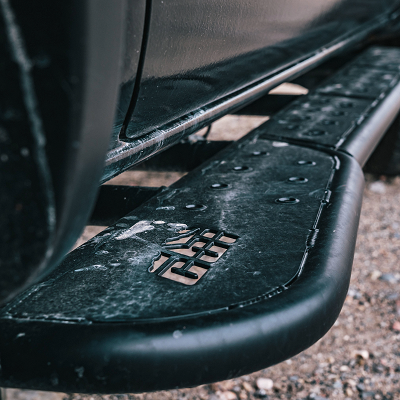
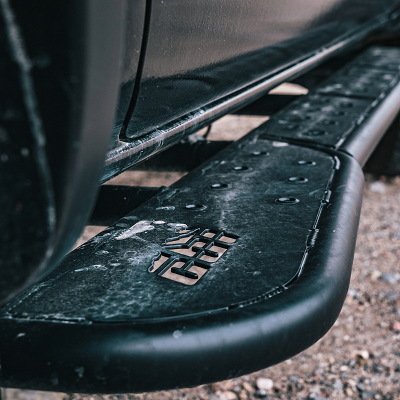
Rock sliders rank among the most important protective accessories for your 4Runner, protecting the rocker panels and can provide a stable lifting point during recovery situations. Unlike "nerf bars" or running boards, true rock sliders mount directly to your frame for maximum strength.
Quality sliders should be constructed from DOM steel tubing and feature adequate mounting points along your frame. Some designs offer a kick-out angle at the rear to push your vehicle away from obstacles, and well, I've heard countless stories about how these kick-out angles saved their rear quarter panel from smashing up into a tree, and the best part is you can effectively use them as steps when you're reaching for something on your roof rack.
But for those who daily drive their 4Runner, consider getting a slider with a top plate or step feature on top to provide convenient entry and exit all around your 4Runner. Companies like C4 Fabrication, CBI Offroad, and RCI Offroad produce excellent sliders specifically engineered for the 4Runner.

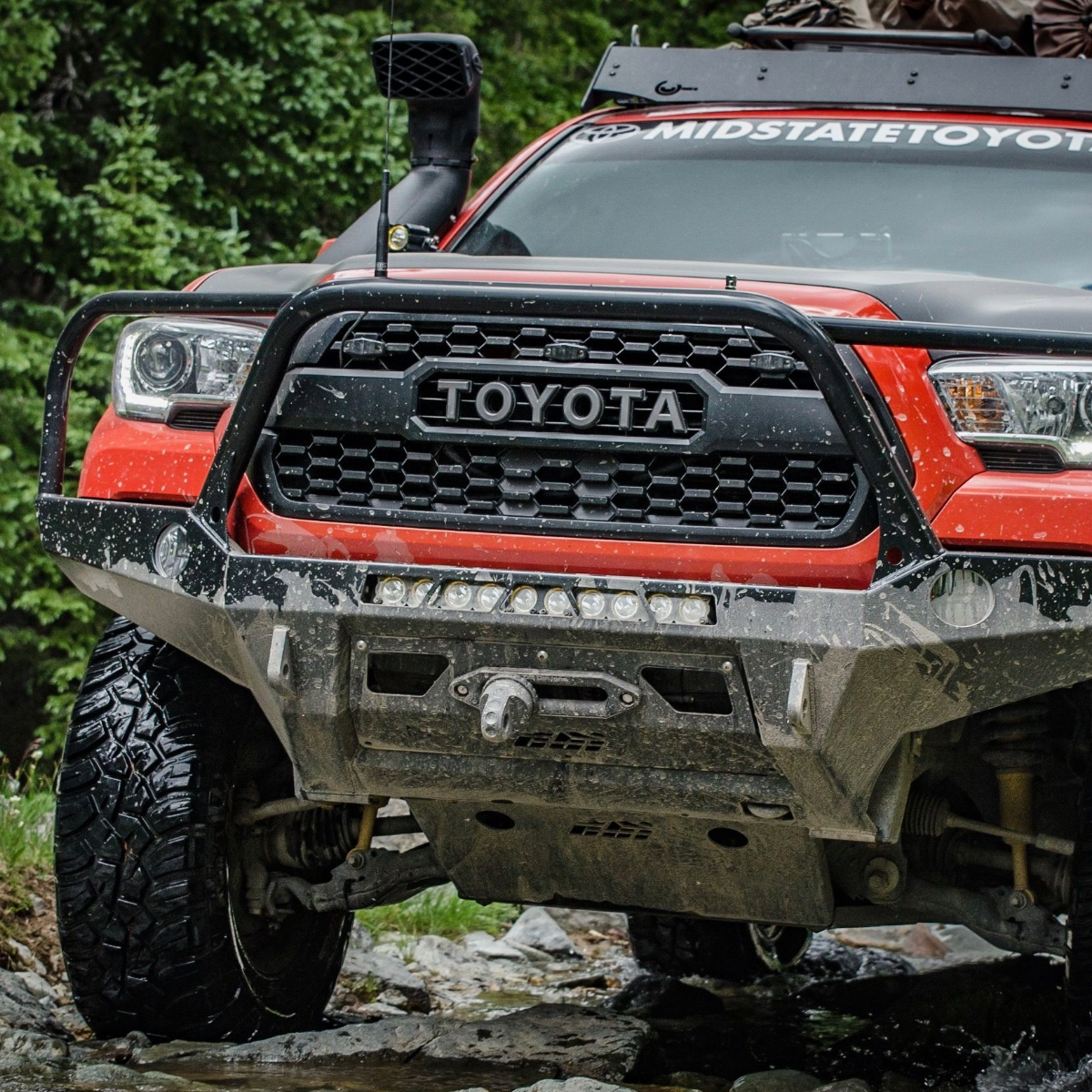
Replacing your 4Runner’s factory bumper with an aftermarket one drastically improves approach angles, protection, and functionality. Modern steel bumpers typically incorporate winch mounts, recovery points, and light mounts which makes it more functional rather than just a design element.
When I upgraded to a steel front bumper, my approach angle improved by nearly 10 degrees, the difference between scraping on obstacles and clearing them confidently. And if you do scrape with a steel bumper it's going to be more resilient and easier to fix if it does get dented or scuffed.
Additionally, integrated recovery points have simplified winching operations compared to the factory tow hooks.
Most quality bumpers offer a choice between full-width coverage or “low profile” designs that provide protection while maintaining a more subtle appearance. Material thickness typically ranges from 3/16” to 1/4” steel, with options for different powder coat finishes to match your vehicle. For those looking to further customize their 4Runner, options to remove or cover chrome elements can enhance the vehicle’s rugged appearance.
Consider your specific needs when selecting a bumper. If you frequently travel in deer-heavy areas, a full hoop design with a brush guard offers valuable protection. For technical rock crawling, a stubby design maximizes clearance.

Like aftermarket front bumpers, a quality aftermarket rear bumper completes your 4Runner's armor package while adding valuable functionality.
But here's something else, some rear bumpers incorporate swing-out tire carriers and storage options for gear like jerrycans and hi-lift jacks. You have to remember that storage is a different thing when you're in an SUV like a 4Runner, so having these rear bumpers with extra storage can be a huge help when you're carrying a lot of gear.
When selecting a rear bumper, consider your spare tire size. Many 4Runner owners upgrade to larger tires that no longer fit in the stock location. With proper engineering, a quality swing-out carrier can handle tires up to 37" tire.
Look for rear bumpers with integrated recovery points and proper frame mounting. Just as with front bumpers, material thickness should be 3/16" to 1/4" steel for adequate protection.

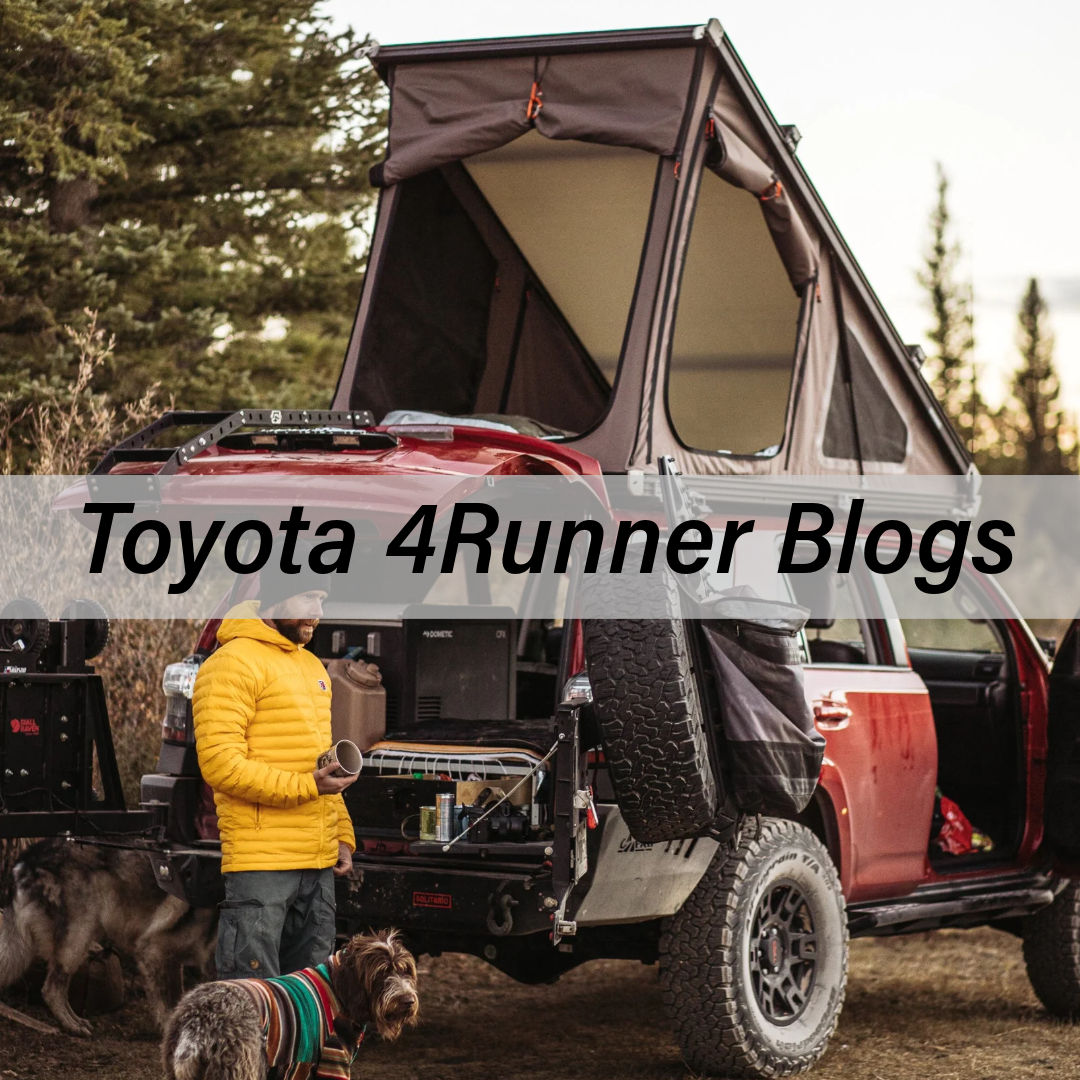
Roof-top tents have changed vehicle-based camping, providing comfortable, elevated sleeping quarters that set up in minutes. When mounted to a 4Runner roof rack, these tents transform your vehicle into a true expedition rig. These tents are perfect for off-roading adventures, providing a comfortable and elevated sleeping solution that sets up in minutes.
I’ve spent countless nights in a roof-top tent, and the convenience cannot be overstated – no more searching for level ground, dealing with wet surfaces, or worrying about ground-dwelling critters. Additionally, the elevated position provides better views and often catches pleasant breezes.
When selecting a tent for your 4Runner, ensure your roof rack is rated for both the static and dynamic load of your chosen model. Hardshell tents typically weigh 130-180 pounds, while softshell designs range from 100-140 pounds. Your rack needs to support this weight plus the occupants (approximately 400-500 pounds total) when stationary.
Roof tents also reduce fuel efficiency due to their weight and their effect on your 4Runner's aerodynamics, so take that into consideration.
Consider your camping style when choosing between hardshell and softshell designs. Hardshells deploy faster and include a more rigid structure, while softshells often provide more interior space and cost considerably less.

A snorkel elevates your 4Runner's air intake, providing cleaner air during dusty trail rides and some protection during water crossings. But, while they're marketed heavily for water protection, their primary benefit is drawing air from above the dust cloud that forms when driving in convoys.
Quality snorkels are typically made from UV-resistant polyethylene or similar materials and replace your factory airbox intake. Installation requires cutting a hole in your fender, so proper alignment and sealing are critical to prevent water intrusion.
When shopping for a snorkel, look for designs that minimize airflow restriction and include pre-filters or water separators. Dobinsons and ARB are reputable manufacturers offering 4Runner-specific kits with detailed installation instructions.

An aftermarket exhaust system can provide modest performance gains while delivering a more satisfying engine note from your 4Runner's V6 powerplant. These systems typically reduce backpressure through larger diameter piping and less restrictive mufflers.
When I upgraded to a cat-back stainless system, I gained approximately 5-8 horsepower and noticed slightly improved throttle response.
For the 4Runner, exhaust options typically fall into three categories: cat-back systems (replacing everything behind the catalytic converters), axle-back systems (replacing just the muffler section), and headers (replacing the exhaust manifolds). Cat-back systems offer the best performance gains while maintaining emissions compliance in most states.
Look for systems constructed from 304 stainless steel for maximum durability, particularly if you frequently drive in areas that use road salt. Brands like Borla, Magnaflow, and Gibson offer well-engineered systems specifically designed for the 4Runner's undercarriage layout.

Modern aftermarket LED headlights deliver improved visibility compared to the factory halogen units on most 4Runner models. This upgrade enhances safety during night driving while giving your vehicle a contemporary appearance.
Quality LED headlight assemblies typically feature projector-style optics that create a well-defined beam pattern with minimal glare to oncoming traffic. Many include integrated daytime running lights (DRLs) and sequential turn signals for enhanced visibility and style.
When selecting headlights, ensure they're DOT-compliant for legal road use. The best units feature proper heat sinks and cooling systems to extend LED lifespan. Manufacturers like AlphaRex and Morimoto offer excellent plug-and-play options for various 4Runner generations.

Aftermarket LED tail lights upgrade your 4Runner's looks and safety with improved visibility and distinctive styling. These assemblies typically offer brighter illumination and faster response times than factory incandescent bulbs, which in turn can potentially avoid rear-end collisions.
Quality tail light assemblies feature proper sealing to prevent moisture intrusion and sufficient heat management for long LED lifespan. Most designs incorporate multiple LEDs to maintain function even if individual diodes fail over time.
Look for plug-and-play designs that utilize your vehicle’s existing wiring harness without modification. Popular manufacturers like BulletProof Lighting, AlphaRex, and Anzo USA offer stylish, functional options specifically designed for the 4Runner.

A properly mounted LED light bar transforms nighttime off-road visibility, illuminating obstacles far beyond your headlights' reach. These powerful accessories are particularly valuable on remote trails where ambient light is minimal.
The first time I drove a technical trail at night with my 30" light bar, the difference was astounding. Obstacles that would have been nearly invisible became clearly illuminated, allowing much safer navigation at a reasonable pace.
Light bars are available in various lengths and beam patterns. Spot beams project light farther down the trail, while flood beams provide wider coverage of your surroundings. Combination patterns offer the best of both worlds and are ideal for most users.
Most light bars mount either to the roof rack or behind the grille on a hidden bracket, or in some cases on an aftermarket front bumper.
Roof mounting provides maximum illumination but may create wind noise, while grille mounting offers a cleaner appearance.

Upgraded fog lights improve visibility in poor conditions like fog, dust, and snow. Unlike driving lights that project straight ahead, proper fog lights have a wide, flat beam pattern that illuminates the area immediately in front of your vehicle without excessive reflection.
I've found the yellow light from my LED fog lights cuts through dust and light fog much better than the standard white beams. During desert trips, this specific wavelength provides noticeably improved visibility when trailing other vehicles.
Quality fog light upgrades typically replace just the bulbs in your factory housing or swap the entire assembly for a more powerful LED unit. The best options maintain proper beam patterns that complement rather than interfere with your headlights.
For bulb-only replacements, look for options with proper heat dissipation to prevent damage to your factory housings. If replacing the entire assembly, ensure the new units are properly sealed against moisture. I also recommend getting LED light pods if you have an aftermarket front bumper that removes the original fog light location.

The 4Runner's suspension system ultimately determines both its off-road capability and on-road comfort. These upgrades form the foundation of a well-built rig, improving everything from articulation to load-carrying capacity.
Aftermarket upper control arms (UCAs) are essential when lifting your 4Runner, allowing proper alignment and increasing suspension articulation. These components replace the relatively restrictive factory arms with stronger, more adjustable alternatives.
Quality UCAs typically feature uniball joints that permit greater articulation than factory ball joints, though some premium options use serviceable ball joints for maximum longevity.
Look for UCAs with proper dust boots to protect the joints and Zerk fittings for regular greasing. Adjustability is another key feature, allowing for proper alignment after lifting.

Upgrading your 4Runner's lower control arms (LCAs) is an underrated mod, but it will provide significantly increased strength and can improve suspension geometry, particularly in heavily modified vehicles. These components experience significant stress during off-road driving and are vulnerable to damage from rocks and obstacles.
Upgraded LCAs are also much more resilient to damage since a lot of them have integrated skid plates.
Most aftermarket LCAs are constructed from DOM or chromoly steel tubing with reinforced mounting points and heavy-duty bushings or joints. Some designs incorporate adjustable geometry for fine-tuning your suspension.
Given their critical role in your suspension system, invest in LCAs from reputable manufacturers with proven track records. Total Chaos, Dirt King Fabrication, and Icon Vehicle Dynamics produce excellent options specifically designed for the 4Runner platform.

A proper suspension lift kit improves your 4Runner's ground clearance, approach/departure angles, and tire clearance while maintaining or enhancing ride quality. These kits typically combine multiple components to achieve a balanced, functional upgrade.
Lift kits generally fall into three categories: spacer lifts like the Westcott Designs Preload Collar lift kit, simple, cheap, but doesn't add any performance. Then you have comprehensive suspension lifts (replacing springs, shocks, and often control arms). For serious off-road use, comprehensive kits offer the best performance, comfort, and longevity.
There's also a body lift kit which purely lifts the body from the chassis, lifting it without any beneficial gains, and potentially messing up your center of gravity, which is why we don't recommend body lift kits that much.
When selecting a lift kit, honestly consider your usage. Higher lifts require more supporting modifications and may affect daily drivability, not to mention it's much more expensive as well. For most users, a 2-3 inch lift provides the best balance of capability and practicality. Reputable manufacturers like Icon Vehicle Dynamics, Old Man Emu, and Westcott Designs offer great lift kits for your 4Runner.

Long travel suspension systems represent the ultimate off-road upgrade, significantly increasing wheel travel and capability. These comprehensive kits expand your 4Runner's track width and require substantial supporting modifications.
Long travel kits will allow your 4Runner to absolutely dominate high-speed desert sections, floating over washboard and small whoops that force standard vehicles or even slightly lifted rigs to slow significantly. This capability comes at the cost of extensive modification and reduced daily drivability.
True long travel systems typically require cutting and reinforcing factory mounting points, often extending control arm mounting locations and necessitating body modifications for tire clearance. The expanded track width requires extended wheel options with appropriate backspacing.
These systems represent a significant investment and commitment to off-road performance. Total Chaos, Camburg Engineering, and Icon Vehicle Dynamics produce well-engineered long travel systems for the 4Runner, though these typically focus on more recent generations.

Quality aftermarket shocks transform your 4Runner's ride quality and capability even without changing other suspension components. This is considered the gateway drug to off-road mods for most people since it's one of the simplest mods that brings the most improvement.
These shocks affect the suspension's movement, preventing excessive bounce while allowing necessary articulation.
Modern performance shocks feature several key technologies: remote reservoirs increase oil capacity for better cooling; adjustable compression and rebound circuits allow customized tuning; and position-sensitive valving provides variable damping throughout the travel range.
For most users, a monotube design offers the best performance improvement over factory twin-tube shocks. If your budget allows, compression adjustable units provide valuable tuning capability for different terrains and loads. Fox, King, Icon, and Bilstein offer excellent shock options specifically valved for the 4Runner platform.

While trail capability often dominates modification discussions, interior upgrades enhance your daily experience with your 4Runner. These practical accessories improve organization, comfort, and functionality.
Purpose-built dash mounts provide secure attachment points for phones, GPS units, and other electronics without resorting to suction cups or vent clips. The dash mounts we recommend integrate cleanly with your 4Runner's interior and can hold several devices at once.
Most dash mounts for the 4Runner attach either to existing dashboard screws or to the factory trim without permanent modification. Quality mounts typically feature adjustable positioning and quick-release functionality for device removal.
Look for mounts that position your device within easy reach without obstructing important controls or displays.

All-weather floor mats protect your 4Runner’s carpets from dirt, water, and stains, preserving interior condition and resale value. Unlike factory carpet mats, quality all-weather options feature raised edges and water-trapping channels.
The best floor mats are laser-measured for your specific 4Runner generation, providing complete coverage without becoming a danger by blocking the pedals or seat rails. Materials range from hard plastic to flexible rubber compounds, with the latter typically providing better containment and less noise.

Quality seat covers protect your 4Runner's upholstery from wear, spills, and sun damage while potentially adding comfort features like additional padding or heating elements. These covers extend seat life significantly, particularly off-road and overlanding rigs.
Modern seat covers are available in various materials, including neoprene (excellent water resistance), Cordura (maximum durability), and synthetic leather (upscale appearance). The best covers are custom-fit to your specific 4Runner model.
When selecting seat covers, consider your habits. If you frequently engage in water sports, neoprene offers the best protection. For heavy-duty work or off-road environments, canvas or Cordura provides superior tear resistance.

The Toyota 4Runner provides an excellent platform for customization, with thoughtful accessories enhancing its already impressive capabilities. From serious protection upgrades like skid plates and sliders to practical interior modifications, each addition transforms your vehicle to better match your specific needs.
I've found that prioritizing quality components from reputable manufacturers ultimately provides the best value. While budget options may seem attractive initially, the performance and longevity differences become apparent in real-world use.
For those new to modifying their 4Runner, I recommend a methodical approach: start with protection components, upgrade suspension to support your usage requirements, and then add specialized accessories for your specific activities. This strategy ensures each modification builds upon a solid foundation.
Truck Brigade maintains an extensive selection of personally tested 4Runner accessories, backed by a team with real-world experience using these products in demanding conditions. Our experts can help you modify your 4Runner to your specific needs and budget so feel free to reach out anytime!
Start with protection components (skid plates and sliders) if you plan to go off-road, as these prevent expensive damage. If you're primarily focused on appearance and daily driving, quality suspension components provide the most noticeable improvement in ride quality and handling.
Many accessories can be installed with basic hand tools. Protection components like skid plates and simple accessories typically require only a couple of hours and standard tools. However, complex modifications like suspension systems benefit from professional installation with proper alignment afterward. Many accessories can be installed at home, offering significant savings compared to the original price with professional installation.
For most 4Runner owners, a 2-3 inch suspension lift represents the ideal balance between improved capability and maintained reliability. Larger lifts (4+ inches) typically require extensive supporting modifications, including driveline corrections, brake line extensions, and significant alignment adjustments.
Under the Magnuson-Moss Warranty Act, aftermarket parts cannot void your entire vehicle warranty. However, if a dealer can demonstrate that an aftermarket part directly caused a specific failure, that particular repair might not be covered. Quality accessories from reputable manufacturers minimize this risk.
All 4Runner generations respond well to thoughtful modifications, but the 2010-present 5th generation has the most extensive aftermarket support. The 2003-2009 4th generation offers an excellent balance of modern features and affordable pricing, while the 1996-2002 3rd generation has developed a strong following for budget-conscious builds.
Comments will be approved before showing up.