Your Cart is Empty





I watched an FJ Cruiser limp into a trailhead parking lot last year with a bent lower control arm nearly dragging on the ground. The owner had hit a rock at speed, and the stock arm folded. "I didn't think they could bend that easily," he said.
Most people don't give lower control arms a second thought until something breaks. But these components take more punishment than almost anything else under your FJ, it's supporting weight, absorbing impacts, and maintaining geometry through every bump and obstacle.
When problems show up, understanding your options makes the difference between a smart upgrade and wasted money, or better yet, upgrading before those problems even happen. Here's everything you need to know about FJ Cruiser lower control arms.
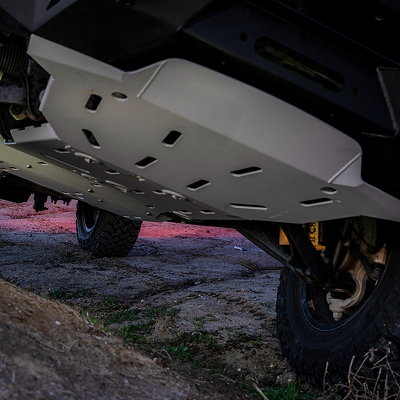
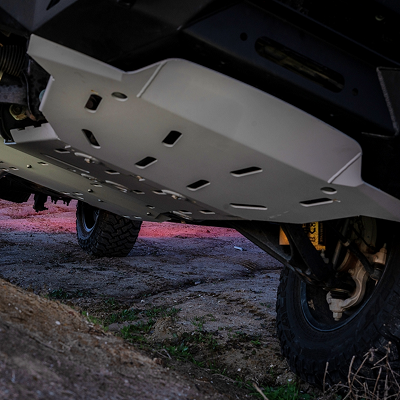
The FJ Cruiser uses a double wishbone setup up front with torsion bars handling spring duties. Each lower control arm connects the frame to the steering knuckle through two mounting points at the frame and a ball joint at the wheel. It's the bigger, beefier component compared to the upper arm, and it carries most of the suspension load. Toyota added an aluminum skid plate on many models to help protect them from rock strikes.
Simple physics explains why lowers get hammered harder than uppers. They sit at the lowest point of your suspension, right in the line of fire for rocks, logs, and obstacles. Every time you compress the suspension hard, that force travels through the wheel into the lower control arm. We're talking compression loads, torsional twist, lateral stress, and direct impacts. Stock stamped steel handles daily driving fine, but throw it at aggressive terrain, and you'll find its limits pretty quickly.
Stock lower control arms are stamped steel. They work fine for what Toyota designed them for, but they're not overbuilt. Hit something hard enough, and they'll bend. Sometimes, it's just enough to throw your alignment off without looking damaged, but there are times when catastrophic failure can happen.
Ball joints wear out faster with bigger tires and aggressive driving. You'll hear clunking over bumps or feel looseness in the steering. The rubber bushings at the frame mounts deteriorate over time too, creating slop that causes wandering and vague steering. Once you start noticing these symptoms, it's time to address them before they get worse.
Some problems are obvious. Crawl under and look for bent metal, cracks near welds, torn ball joint boots, or bushings separating from their housings. Any of that means immediate replacement.
Other signs are subtler. Your alignment won't hold. Steering feels loose or wanders. You hear clunking when turning or hitting bumps. Tires wear unevenly, no matter how many times you get aligned. The tricky part there is that symptoms can also be caused by other failing suspension components, that's another point to upgrade before you even get these issues.
Running mostly on paved roads with occasional mild trails? OEM replacements make sense. They're designed for exactly that use case. Just verify your vehicle's model year and spec number before ordering on a dealership or even a local parts store, it's straightforward.
Lift kits over 3 inches change suspension geometry enough that beefier arms make sense. The same goes if you're regularly wheeling hard. I've seen too many good trail days end early because someone bent a stock arm. Don't be that guy.
Big tires load the suspension harder too. If you're running 35s or larger, upgraded arms give you the strength margin to actually use that capability without constantly worrying about breaking something.
These use similar stamped steel construction to factory arms, maybe with slightly better coatings or materials. They bolt right in using factory mounting points. Most affordable option when you just need to replace worn arms. Check the SKU number to verify fitment before buying.
Think thicker steel or boxed construction instead of stamped single-piece designs. Quality versions use DOM steel tubing, chromoly steel, or billet aluminum with gussets at stress points and heavy-duty ball joints. The difference in strength is night and day compared to stock, without needing alignment changes beyond normal adjustment.
Designed specifically for extended suspension travel setups. They're longer than stock to optimize geometry at increased ride heights and travel. You can't just bolt these on, they're part of a complete long-travel system that includes matching upper arms and extended CV axles.
The quality of your lower control arms comes down to these parts. Ball joints carry huge loads; good manufacturers spec Moog or Mevotech units rated for serious stress. The lower ball joint especially matters since it directly affects steering and handling.
Bushings matter more than most people realize. Polyurethane bushings last longer and deflect less than rubber, but they transmit more noise and vibration. Upgraded rubber compounds try to split the difference. Look for greaseable components when possible, being able to service ball joints and bushings extends their life considerably and helps you catch wear before it becomes a problem.
Lower control arms directly control caster, camber, and roll center throughout suspension travel. Upgrade to reinforced arms that keep stock geometry? Alignment stays straightforward. Go with long-travel or modified-geometry arms? You'll need a shop that knows modified suspensions.
The handling improvement from quality arms comes from reduced flex and better geometry under load. Yeah, heavier reinforced arms add a bit of unsprung weight, but we're talking negligible differences. The rigidity benefits far outweigh any weight penalty.
For FJ owners seeking maximum durability, Dirt King’s Performance Lower Control Arms (2010–2014) are a high-end, "overbuilt" replacement for the vulnerable factory units. Unlike standard tubular arms, these feature a boxed-plate design with an internally ribbed construction engineered to withstand extreme off-road impacts without bending.
Each arm includes an integrated 1/8-inch aluminum skid plate to deflect rocks and obstacles away from critical suspension points.
For the pivots, Dirt King utilizes heavy-duty Moog ball joints rather than uniballs, providing superior on-road tracking, a longer lifespan, and easy serviceability at any local parts store. The inner pivots are upgraded to Delrin bushings, which offer a stiffer, more durable alternative to soft rubber or polyurethane, ensuring the arms maintain precise geometry under heavy loads.
These arms are a direct bolt-on upgrade that maintains stock track width while providing significantly more ground clearance and specialized mounts for limit straps and bump stops. This is a professional-grade investment designed for serious builds where trail survival is the top priority.

Shop Dirt King Lower Control Arms
Total Chaos is legendary for building "race-ready" hardware, and their stock-length lower arms for the FJ Cruiser are no exception. Moving away from heavy tubing, these arms are handcrafted in the USA using laser-cut 4130 chromoly plates. The fully boxed design features internal gussets and a three-stage powder coat with a durable clear coat, specifically engineered to maximize ground clearance while remaining lightweight.
The mechanical heart of these arms is a Billet CNC-machined uniball cup housing a 1-inch 100% stainless steel uniball. This setup completely replaces the weak factory ball joints, providing vastly superior strength and articulation. To accommodate high-performance builds, a specialized pocket is added at the shock tabs, allowing for coilovers up to 3.0 inches in diameter from any major brand.
For the frame pivots, Total Chaos utilizes urethane bushings to reduce deflection and provide a much tighter steering feel than factory rubber. These include zerk fittings for easy, on-vehicle maintenance. While these arms retain factory steering angles and track width, they are available in the standard shock configuration, or if you like things a bit crazy, they also make LCAs for dual shock setups.
If you are building an expedition-grade FJ where weight and indestructible strength are the primary goals, these arms are the gold standard.

Freedom Off-Road offers budget-friendly lower control arm options with reinforced construction stronger than stock while maintaining affordability. These work well for FJ owners who need replacement arms on a limited budget. The parts are compatible with most model years and bolt to factory mounting points, it's almost OEM if you ask me.
Construction quality is adequate. You get heavier gauge steel and some reinforcement, but not a premium manufacturer's overbuilt design. These arms perform reliably for moderate use, including occasional wheeling and mild lifts. Pricing runs $350-500 for the pair, not including shipping.
Freedom arms make sense as an economical step up from stock for FJ Cruisers, seeing mixed street and light trail use. The components use greaseable ball joints and adequate bushings.

SuperPro focuses on suspension bushings, offering complete lower control arm assemblies with their polyurethane bushing technology. SuperPro bushings reduce flex and maintain alignment better than rubber while providing acceptable ride comfort for daily driver applications.
SuperPro arms use reinforced construction paired with their polyurethane bushing kits. The combination provides improved handling compared to worn stock arms. The polyurethane transmits slightly more road noise, but most users find the tradeoff acceptable.
These work well for FJ owners who want improved handling without going to full race-spec components since this is more of an OEM+ mod. Popular with overlanders and adventure travelers who need reliability but want reasonable on-road comfort. SuperPro focuses on street performance with some off-road capability, making these ideal for 80/20 builds.

Installation is straightforward: support the vehicle safely, pull the wheel, disconnect the ball joint, and unbolt the frame mounts. Most designs use factory mounting points so installation is just in reverse. Just follow the manufacturer's instructions.
Here's what matters: torque specs aren't optional. Lower control arm bolts need to be torqued with the suspension at ride height, not hanging in the air. Load it onto jack stands that support the suspension properly before final torquing. Skip this, and you'll bind bushings, causing premature wear.
Get an alignment afterward. Find a shop that knows lifted trucks if yours is modified. And here's the legal boilerplate: manufacturers aren't responsible for installation screw-ups. So your sole responsibility is not to skimp out on installation. Failed control arms cause loss of control. Verify your torque specs, double-check compatibility with your model year, and do it right the first time.
Lowers and uppers have completely different jobs. Lower arms handle the heavy lifting—literally. They bear the load and need to resist bending and impacts. Upper arms are about geometry and adjustment range, especially once you lift the truck.
Most people upgrade uppers first on a lifted FJ because that's where the alignment issues show up immediately. Lower arm upgrades come later, once you start actually hitting them on obstacles or realize the stock ones aren't up to the abuse you're dishing out. Both matter, but they solve different problems.
Stock or mild FJ seeing street use and occasional dirt roads? OEM replacements work fine. Lifted FJ with 3+ inches and 35s that sees regular trail time? Reinforced arms from Dirt King or Total Chaos make sense. The strength upgrade is worth it, especially if you're already dealing with bent stock arms.
Building a serious off-road machine? Buy the best you can afford while also suiting your intended use case. Compare specs and details as well as search for reviews.
Here's the bottom line: match your arms to how you actually use your truck, not how you think you'll use it. Quality arms are an investment in capability and safety. They protect your rig and let you keep pushing without worrying about breaking critical components. Buy from reputable brands and install them right.
Got any questions regarding a certain build or budget you'd like to work with? Feel free to contact us here at Truck Brigade or leave a comment below! We're always happy to help.
Comments will be approved before showing up.